

Resisting Intermittence
Two very important essays structure this post: Atmospheres by the German philosopher Hermann Schmitz (Mimesis 2026), and the second by the French philosopher Yves Michaud, L’art, c’est bien fini: Essai sur l’hyper-esthétique et les atmosphères (Gallimard, 2021) Art Is Truly Over: An Essay on Hyper-Aesthetics and Atmospheres.
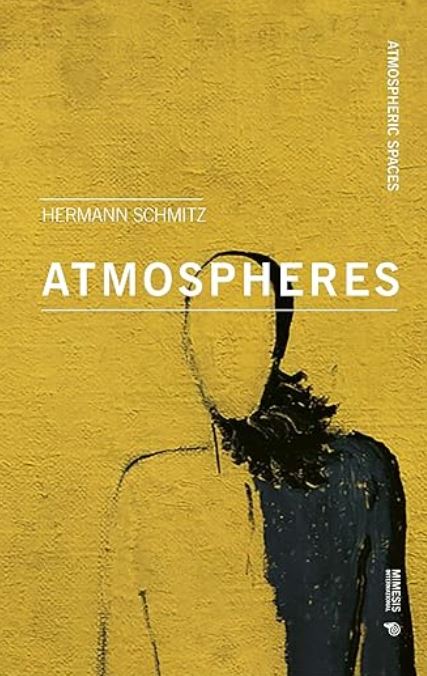
According to Hermann Schmitz, an atmosphere refers to air, wind, weather, but above all to what we experience when we enter into it. It is not only something that surrounds us, something we see; it is also something that reaches us, envelops us, and passes through us. This is where Michaud’s essay becomes essential: we live in an era and an atmosphere of hyper-aestheticization that invades every aspect of existence — bodies, objects, cities, experiences — to the point that the entire world is staged, stylized, and consumed like a work of art. Everything must please the eye: ripped jeans, cosmetic surgery, tourism, charitable foundations; “it is beautiful to be compassionate, it is beautiful to be good” (e.i. Angelina Jolie). After reading these two books, I asked myself two questions:
Question 1: How can I distinguish myself as a visual artist in this world of “artistic producers”?
Question 2: How can I make the presence of my work felt by an audience immersed in omnipresent beauty?
I will attempt to respond in my own way by raising a third question: do we, visual artists, not work above all to produce atmospheres, sensitive climates? In other words, are we not, ultimately, creators of atmospheres?
Yves Michaud confirmed my intuitions. The idea that art, conceived as an evolutionary process in the Darwinian way — as Clement Greenberg once insinuated — is indeed over. Since the 1960s, everything is now art. The art historians Arthur Danto and Wolfgang Welsch speak of beautification and sugarcoating (YM 28–29) of things; we “aestheticize.” We even “artify” morality to the point the work of art is badly executed, and the aesthetic collapses. (YM p.74).
Michaud continues: we create aesthetic “bubbles of reality.” The question remains whether they will rise high into the sky, carried by the spirit of the times, or whether they will simply burst as soon as they appear. That is the question! We have to acknowledge that in an age of hyper-aestheticization, a significant number of works—sometimes of debatable quality—circulate under the label of “art.”
How Can We Avoid the “Bubbles”?
For about forty years, I have asked my students this simple and venerable question: “Why do you practice painting?” — while knowing that, deep within, one practices it out of pure necessity. But Michaud sees it differently… and he states, not without energy and intensity: “To remain happy while playing the fool and living intermittent, erratic experiences?” (YM IX-6); to create “bubbles of unreal reality,” as everyone does.
Ouch!
I admit that Michaud’s statement is severe — yet I learn a great deal from those who have passed through time without deceiving themselves. If art, for Yves Michaud (born in 1944), is some form of hedonism, why should we waste our precious time painting the “gnin-gnin” (sentimental trivialities) in a world that so often proves superficial?
Beyond the “Wow!,” the “bankable,” and the “politically correct” (YM, p 243), what should I paint for my works to last over time, like Mark Rothko, Peter Doig, Tracey Emin, and so many others? These are the kinds of questions that push us to reflect on our practice. The French philosopher accompanies us with clarity in his long reflection.
The Work of Art Must First Be “Felt”
It seems that Hermann Schmitz and Yves Michaud suggest that a work of art, in order to stand on its own, must first make us “éprouver” (in French). Originally, the verb éprouver meant “to put to the test,” to try out, to experience — before later acquiring the more intimate meaning of “to feel.” To feel the experience of a painting, a piece of music, or a text is always to enter into one — sometimes several — atmospheres. One must perceive a presence in a work of art; and then, one may ask if no presence manifests itself, does the work truly exist?
If the above-mentioned artists move us so deeply, it is because throughout their careers they have developed series of works that release a singular and coherent atmosphere — the ostensible of Mark Rothko, the abandonment of Tracey Emin, the nomadism of Peter Doig — as a faithful reflection of who they are, which is why continuity is so important. Such an atmosphere cannot emerge from intermittent (sporadic, erratic, irregular) work, from an isolated piece here and there. It arises from perseverance, from a life project rooted in duration. Through an honest commitment, grounded in who we are and sustained over the long term (un temps long in French), this atmosphere gradually takes form.
Telling one’s life with sincerity, at any age and in any circumstance, contributes to this atmosphere — these are the famous stories to tell, the ones that unite us. How many years have I repeated this in my classes, my workshops! Finding the thread that connects all these stories, that “thin but solid thread that links your experiences together” (YM), requires throughout life a patient and immense work of inner exploration. One must honnestly probe deeply; and, I believe, first through writing… only a few pages needed. It then becomes a matter of “bringing this thread to life,” not through a single series, but through a succession of series of paintings which, gradually and together, will bring this atmosphere into being: the “project” of a life as a visual artist! Here, the work unfolds over “un temps longs”, a long span of time, demanding patience and perseverance.
I still teach art. Our art workshops are also art retreats. As I grow older, it seems to me that we return to our youth — to its first ideals, to the awakening of our spirituality, to the innocence of the being we once were, certainly altered by time yet intact at its core. Do we truly change in this cosmic micro-nanosecond that is the span of a human life? Essentially, no. So why should we want to reinvent the world, as if everything had to be done over again? Perhaps there is nothing to reinvent. All that remains is to affirm our true presence by resisting intermittence.
Header image by Ryan Arnst > unsplash.com/
0 Comments